
Anúncios
What this means for you: modern phones, watches, smart cameras, home appliances, and cars now run machine learning where data is created. This setup gives you faster responses and better privacy by keeping much processing on the device.
On-device inference cuts round trips to distant servers, so actions happen in milliseconds. That saves bandwidth and keeps sensitive data local while the cloud still handles heavy model training and updates.
You’ll see how compact models and new chips with neural engines let your gadgets act quickly and reliably. The result is snappier performance, fewer slowdowns on busy networks, and stronger control over your personal data.
In this guide you’ll compare local and cloud approaches, explore real applications, and learn when local processing wins. By the end, you’ll know how these designs improve responsiveness and why hybrid systems keep your device improving over time.
What Edge AI Is and Why It’s Changing Your Daily Devices
Modern devices run smart models where your sensors and cameras collect information, so responses appear almost instantly. This shift moves more data processing to the gadget itself, cutting wait time and reducing reliance on a distant server.
Anúncios
Edge computing explained
Edge computing means running computation and simple models directly on or near the source of data—on phones, wearables, smart cameras, and cars. That local intelligence turns raw sensor signals into immediate, usable results.
Why now: latency, connectivity, and privacy
Latency matters. When processing happens on your device, responses arrive in milliseconds and work even if the network drops. Limited bandwidth and variable network quality make local processing more dependable for critical features.
Privacy improves because sensitive data can stay on your device instead of crossing networks to external servers.
Anúncios
Key benefits at a glance
- Speed: real-time data processing for quick actions.
- Reliability: offline resilience when connectivity falters.
- Privacy: less data sent to external servers.
Cloud systems still handle heavy model training and long-term storage, but on-device inference trims network use and lowers cost. The result is smarter, faster, and more private applications in your everyday devices.
Edge AI vs. Cloud AI: How Performance, Privacy, and Cost Affect You
When your device handles inference locally, you notice instant reactions that a cloud round trip can’t match. This reduces latency and keeps most processing near the sensor, so features work even when the network is slow.
Latency and bandwidth
On-device inference gives near‑real-time responses because data does not travel to distant servers. That saves bandwidth and improves performance for other applications that share your connection.
Privacy and security
Keeping data local strengthens privacy by limiting what leaves your device. But physical access and device tampering create practical security risks that must be managed with hardware protection and updates.
Cost, power, and efficiency
Local inference can cut recurring cloud fees by reducing data transfer and central compute. It also lowers long‑term cost for steady workloads, though designing efficient models helps protect battery and power on portable devices.
When the cloud still wins
The cloud excels for heavy training, massive analytics, and large storage needs. Many systems use a hybrid pattern: inference near you, training and retraining in the cloud, and periodic model updates back to the device.
- Instant feel vs. round‑trip delay when networks are congested.
- Lower bandwidth use and fewer data transfers to remote servers.
- Stronger local privacy, balanced against device security measures.
- Cloud is best for large‑scale training and storage; local is best for snappy inference.
For a practical decision path and deeper comparison, see this edge vs cloud comparison on Coursera: edge vs cloud comparison.
edge ai consumer tech: Real-World Devices, Applications, and Use Cases
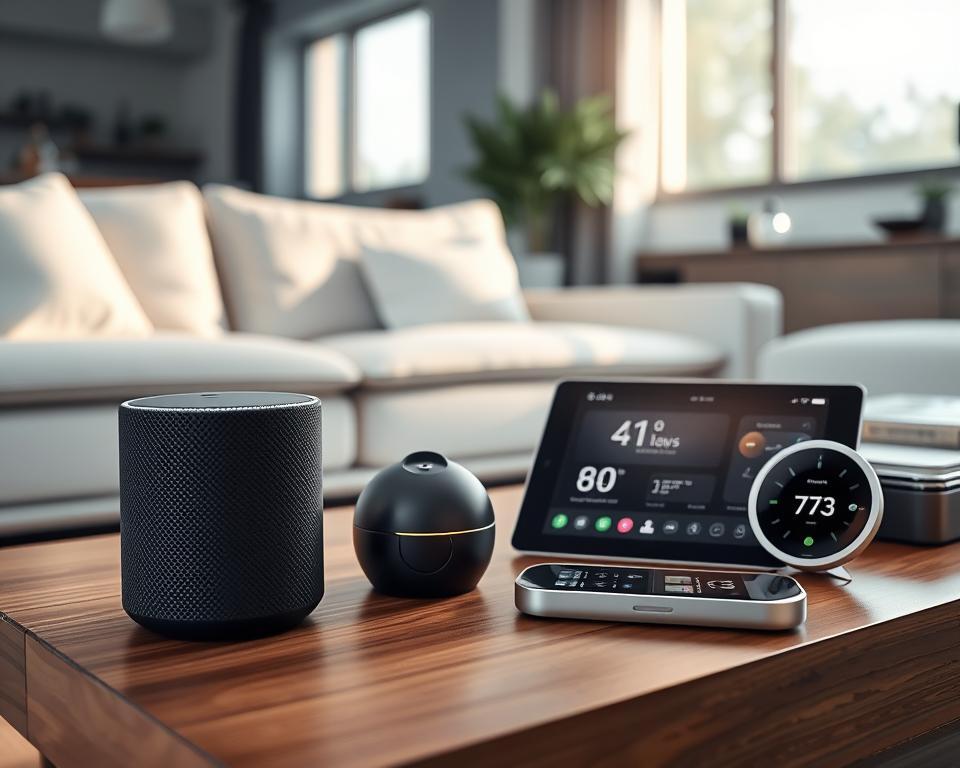
Practical examples show how on-device models change everyday life. Phones, wearables, cameras, cars, and retail systems now run smarter software close to sensors. That means faster responses, less data moving off your gadgets, and tighter control over privacy.
Smartphones and PCs
Your phone and PC use small language models and neural accelerators to power offline assistants. These models speed up replies and keep sensitive data local for better privacy and quick tasks.
Wearables and healthcare
Watches and medical wearables monitor heart rate, movement, and sleep with on‑device monitoring. They can detect falls or alarming vitals and alert caregivers without sending raw healthcare records to the cloud.
Smart home and security
Home cameras run local vision models for object detection and instant alerts. That lowers false alarms and cuts bandwidth by handling most processing on the device.
Cars and mobility
Vehicles fuse cameras and radar with on‑vehicle inference to make split‑second safety decisions. This keeps navigation and collision warnings working even when coverage drops.
Retail, industry, and more
Retail systems use sensor fusion and edge vision for cashierless checkout and smart carts. Industrial lines use predictive maintenance and real‑time quality inspection to reduce downtime and save on repairs.
- Why it matters: these use cases bring improved responsiveness and greater control over your personal data.
- For more examples of real deployments, see seven real-world use cases.
The Tech Under the Hood: Models, Hardware, and Networks Powering Edge Devices
Behind every instant response are slimmed models, purpose-built processors, and smarter network plans that cut delay and save battery.
Model optimization trims size without wrecking accuracy. Techniques like pruning, quantization, knowledge distillation, sparsity, weight sharing, and LoRA shrink models so they run on limited memory and low power.
That lets your device run vision and speech tasks locally while keeping data private and latency low.
Hardware acceleration uses NPUs, efficient chips, and embedded boards such as NVIDIA Jetson and Synaptics Astra. Neuromorphic options and Apple’s M4 neural engine give extra boost for real workloads.
These platforms raise performance and cut energy draw for real‑time processing.
Connectivity and orchestration tie systems together. Standards like ONNX and 5G links simplify deployment and model updates between device and cloud.
- Optimized pipelines from sensors to model execution ensure stable latency.
- Software tools help control versions and push safe updates.
- Trade‑offs between power, efficiency, and performance guide engineering choices.
Making It Work: Hybrid Edge-Cloud Deployment, Monitoring, and Updates
A hybrid deployment blends local inference on devices with cloud training so features stay fast and models improve over time. You get instant responses on the device while heavy training, analytics, and large storage happen in the cloud.
Choosing the right split
Let your device handle latency‑sensitive inference and simple processing. Move training and large retraining jobs to the cloud where resources and scale are available.
Match workloads to location by considering latency, data sensitivity, and cost. This keeps your systems efficient and responsive.
Scaling securely
Federated learning improves models from on‑device data without sending raw files off the device. That reduces bandwidth and strengthens privacy by design.
Robust deployment includes signed packages, secure endpoints, rollback plans, and routine monitoring to catch drift or errors early.
- Monitoring: track accuracy, latency, and failures at the per‑device level.
- Orchestration: coordinate updates and manage resources across thousands of devices.
- Bandwidth: send compact summaries back to the cloud to minimize transfers.
With this hybrid pattern, you balance edge computing and cloud power to future‑proof your systems while keeping user experiences fast and secure.
निष्कर्ष
Today’s systems mix local processing with cloud orchestration so features stay quick and improve over time.
You now see how on‑device inference complements cloud computing to make applications feel faster and protect data privacy. Small models, pruning, and quantization reduce power and boost performance on modern hardware.
Real-world cases in healthcare, retail, mobility, and smart homes show clear use benefits. Hybrid systems let devices run real-time data tasks while the cloud handles heavy training and updates.
Takeaway: put latency‑sensitive, privacy‑critical applications on devices and reserve cloud resources for scale, retraining, and storage. That balance lowers cost and makes systems more reliable for you.