Anúncios
You rely on a steady supply for the meals you buy and the groceries on your shelf. Today, a mismatch between demand and supply is changing where and how crops are grown. Agriculture uses roughly 72% of global freshwater withdrawals, and many croplands already face limits that affect prices and availability.
Put simply: it can take thousands of liters to produce a typical daily diet, while basic human needs are far smaller. That imbalance drives trade shifts and price spikes when key regions see droughts or irrigation cuts.
You’ll see why billions of people live with stress on local sources, and why river basins and aquifers shape regional supply chains. This introduction previews how policy changes, smarter allocation, and tech such as precision irrigation can help secure your access to healthy meals in the near future.
Why water defines your food security right now
Your drinking and tap use add up to about 50–100 liters a day. That feels like a lot, until you compare it to the hidden volume behind what you eat.
From 50–100 liters to 4,000: the hidden water behind your daily diet
A typical 2,800 kcal diet needs roughly 2,000–5,000 liters per person per day to produce. Grain staples are relatively light: 1 kg of wheat requires over 1,800 liters. By contrast, 1 kg of beef can demand more than 15,000 liters because feed and grazing add huge embedded volumes.
Anúncios
Why agriculture uses 72% of global freshwater—and what that means for supply
Globally, agriculture draws about 72% of freshwater withdrawals—nearly 3,000 km³ each year. Nearly 40% of croplands already face stressed supply, which raises the chance of sudden price spikes when dry seasons hit.
- Compare your household drinking needs to the liters behind each meal.
- Recognize how irrigation and crop choice drive regional production and trade.
- Ask suppliers about freshwater sourcing and crop water productivity to judge risk.
Water scarcity food systems: the emerging pattern you need to watch
By mid-century, demographic and income shifts will change which regions produce what you eat and how much they draw from local supplies. Global population is forecast to hit about 9.7 billion by 2050 while GDP more than doubles. That combination raises demand for more resource-intensive diets and increases pressure on irrigated production.
Population, income, and dietary shifts pushing higher water use
Higher incomes in many countries lead consumers toward meats and processed goods. That drives higher per‑person water use in agriculture and across the supply chain.
Anúncios
Result: OECD models suggest global withdrawals rise roughly 55% between 2000 and 2050, with competition from industry and cities squeezing farm allocations.
Closed rivers and depleted aquifers: the squeeze on irrigation systems
Major basins such as the Colorado, Ganges, Indus, Nile, and Yellow now face withdrawals that match or exceed annual renewable flows. When a river is effectively closed, there is no buffer for extra demand, so irrigation rights and cropping choices tighten quickly.
How groundwater overuse threatens future food production
Groundwater supplies about one-third of all use and half of irrigation globally. Many aquifers are overdrawn; two to three billion people live where net withdrawals exceed renewables for months each year.
- Population growth and diet shifts increase demand for irrigation and alter trade patterns.
- Closed rivers leave basins with no margin for drought or growth.
- Chronic groundwater pumping lowers tables, raising costs and production risk.
You can learn more about aquifer stress and management options in this review on groundwater overuse. Planning now can reduce the chance of sudden supply shocks that drive price spikes.
Climate change is accelerating droughts and floods that hit your plate
Climate shifts are intensifying both droughts and floods, and those extremes reach your plate through lower yields and damaged harvests. As temperatures climb, fields need more water to produce the same output. The FAO warns meeting agricultural demand under climate change may require 40–100% more water than without warming.
More extremes, lower yields: the compounding risks to crops
Models show heavier storms and longer dry spells. A 2°C rise could double the population annually exposed to major river floods and at least triple those hit by droughts.
From 2000 to 2014, in 8 of 15 years global grain consumption exceeded production largely because droughts struck key breadbaskets. Without adaptation, major crop yields could fall about 11% in coming decades.
- Direct loss: floods erode soil and delay planting.
- Lower productivity: warming reduces crop water productivity, so fields need more input for the same harvest.
- Risk management: drought‑tolerant varieties, better soil retention, targeted irrigation and contracts can blunt shocks.
You can use these signals to diversify suppliers and time purchases to reduce price swings caused by climate impacts.
Green water, blue water, and atmospheric rivers: the hidden systems connecting regions
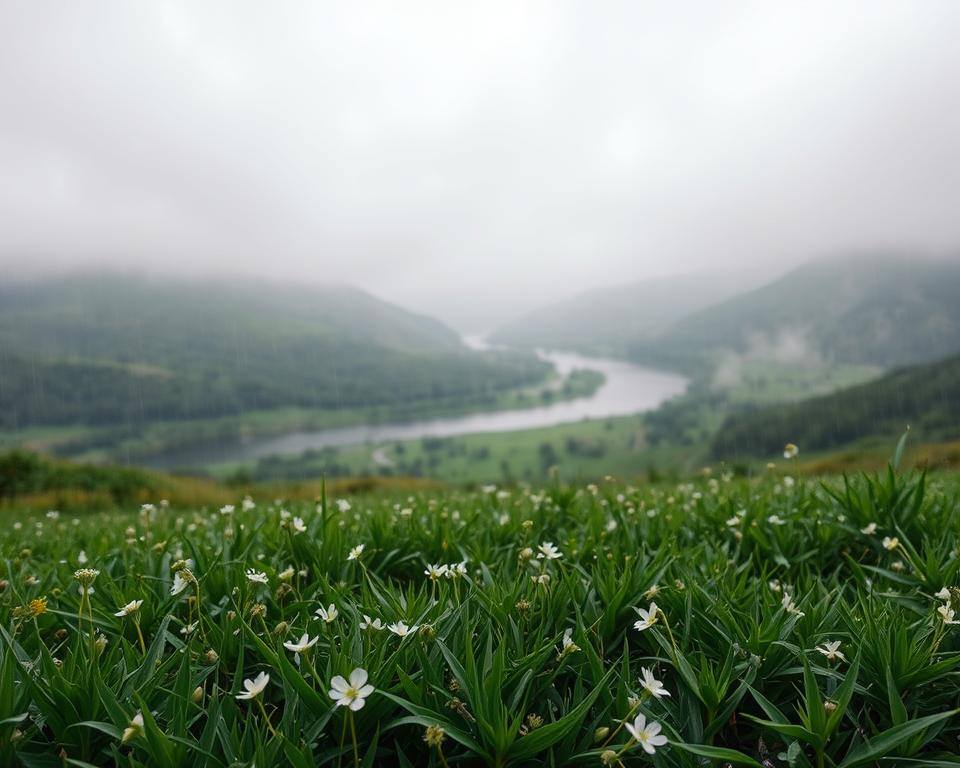
Invisible flows of moisture tie distant landscapes together and shape where crops thrive. Green water — the soil moisture that roots use — supplies much of global crop production. Blue water — rivers, lakes and reservoirs — supports irrigation and towns.
Soil moisture versus surface water and why both matter
For you: soils that hold more moisture cut irrigation needs and make harvests steadier. Good on-farm practices that boost organic matter increase green water retention and lower risk during dry spells.
How forests and wetlands make downwind rainfall
Healthy vegetation recycles moisture through transpiration. Between 40% and 60% of terrestrial rainfall comes from nearby land use. When forests or wetlands are lost, downwind rainfall often drops and seasonal patterns change.
- Distinguish green water in soils from blue water in rivers — both matter for steady production and your food supply.
- Recognize that atmospheric rivers move moisture between countries; China and Russia often gain moisture, while India and Brazil export it.
- Track soil moisture, evapotranspiration and vegetation cover to monitor upstream rainfall “factories.”
Landscape-scale management — from riparian buffers to wetland protection — is practical resource management that stabilizes rainfall and helps farmers and processors adapt to fast changes.
Policy signals reshaping water, food, and equity
How governments pay for irrigation and sanitation shapes who benefits and who loses. Public budgets and price rules decide whether communities gain secure access or face repeated shocks.
Fixing harmful subsidies and smart pricing without hurting the vulnerable
Targeted reform that protects people
Governments now provide about $817 billion each year in agricultural support and roughly $320 billion in sanitation and water subsidies. Too often those funds favor wealthy users while only a sliver reaches the poorest.
Redirecting distortionary payments and pairing realistic prices with targeted cash or vouchers can cut waste and protect low-income households.
Governance for a connected world
Treating water as a global common good strengthens cross-border rules and basin-level plans. Demand could outstrip supply by about 40% this decade unless countries scale reuse, recycling, and finance for infrastructure.
- Pinpoint subsidies that drive over‑use and pollution, then retarget support to the vulnerable.
- Scale circular strategies—reuse and stormwater capture—to lower exposure to drought-driven crisis.
- Use basin caps, transparent accounting, and conditional finance to align efficiency, equity, and security.
Innovation you can scale: doing more crop per drop
Practical innovations now let you get more yield while cutting how much irrigation and pumping farms need. These options can lower costs for farmers and make local supply more reliable. You can back projects that deliver clear, measurable returns.
Precision irrigation, recharge, and safe reuse
Precision irrigation integrates system-scale infrastructure with on‑farm delivery and data tools to target moisture at the plant level. Drip, micro-sprinklers and variable-rate pivots cut withdrawals and energy while lifting yields.
Managed aquifer recharge banks excess surface flows and stormwater underground. Treated municipal wastewater — about 330 km³ annually — could irrigate up to 15% of global irrigated land when safely reused.
Remote sensing and big data for timely decisions
Satellites and field sensors track evapotranspiration, soil moisture, and groundwater drawdown in near‑real time. Dashboards that merge weather, allocation, and demand data give early warnings and guide planting and irrigation choices.
Integrated land and on-farm practices
Combine cover crops, contour farming, and multifunctional paddies to boost soil organic matter and recharge aquifers. These practices increase green storage so crops ride through dry spells with less pumping.
- Compare precision options and sensor scheduling to cut withdrawals and costs.
- Bank wet-season flows with managed recharge for dry-season stability.
- Use reuse near cities with proper treatment and crop selection.
- Measure and reward suppliers for reduced water risk and higher crop per drop.
What this means for the United States
In the American West, shrinking reservoirs and tighter allocations are changing which crops stay in production and where.
The Colorado River reality: reallocations, irrigation trade-offs, and regional food supply
The Colorado River is effectively closed: annual withdrawals meet or exceed long‑term flows and ecosystem needs. States and sectors are reallocating access, so irrigation districts face deep cuts.
High‑value crops in some valleys are most exposed. You may see shifts to less thirsty varieties, acreage changes, or planned fallowing to protect multi‑year soil health.
Where surface allocations drop, groundwater often fills gaps. That relieves shortages short term but causes long declines, subsidence, and higher pumping costs over time.
- Upgrade irrigation: lining canals, drip conversion, and precise scheduling can free supply without gutting incomes.
- Use land transfers: rotational fallowing and deficit irrigation stretch supply in dry years.
- Hedge risks: diversify sourcing across states and seasons and tie contracts to snowpack outlooks.
Federal drought funds, recharge grants, and interstate agreements can help you keep production stable while meeting urban and ecosystem needs. Plan sourcing with seasonal forecasts to avoid surprise price spikes.
Conclusion
You must act now, because how quickly partners move will shape whether crops stay productive and markets hold steady as the climate tightens.
Without strong adaptation, major crop yields could fall about 11% and demand pressures risk a roughly 40% gap between use and supply by decade’s end.
Scale proven fixes—precision irrigation, managed aquifer recharge, and safe wastewater reuse—and pair them with integrated land approaches and fair policy.
That practical playbook secures food security by cutting loss, protecting ecosystems that make rain, and helping producers produce food with less strain.
Track reservoirs, groundwater trends, and seasonal outlooks. Back procurement and finance that reward smarter water management. Your choices today shape a more resilient future for local markets and global food supply.