Anúncios
Have you ever wondered how a second, invisible sound can make your commute or office feel calmer?
Active noise control, also known as active noise control and common in earbuds and cars, uses microphones and clever algorithms to add an antiphase signal that cancels steady background noise.
This quick tour will show you, in plain English, how that math and hardware change audio in the spaces you use daily.
You’ll learn which types of noise this technology handles best, which it doesn’t, and why pairing passive isolation with electronic systems improves overall quality.
Expect clear, practical tips to lower unwanted sound at safe listening levels, plus easy choices you can try today to reclaim quiet in your home, car, or workspace.
Anúncios
How active and passive noise control actually work (so you can pick the right tool)
Let’s cut through jargon and show how microphones, speakers, and materials change what you actually hear.
Active basics: microphones, speakers, and destructive interference
Tiny microphones listen for incoming pressure changes in a sound wave. A processor then creates an inverted signal and sends it to speakers.
When that antiphase signal meets the original wave, they cancel by destructive interference, lowering what you perceive. This is the core of active noise cancellation.
Anúncios
Passive vs. active: when insulation wins
Passive noise measures—insulation, seals, dense panels—absorb and block high frequencies. Those shorter waves bounce and scatter, so materials often outperform electronic methods at higher frequencies.
Where each method shines and where it struggles
Active systems do best on steady, low-frequency hums like engines or HVAC because algorithms predict periodic waves and output matching inverted signals.
- Ear-level cancellation is efficient for one listener.
- Rooms and cabins need multiple mics and speakers to avoid hotspots.
- Phones use multi-microphones to subtract ambient sound for clearer calls.
How to use tech noise reduction in your daily life for quieter spaces
You don’t need a renovation: simple gear choices and small placement tweaks will make your daily space calmer and easier to focus in.
At home: tame hums with headphones and room tweaks
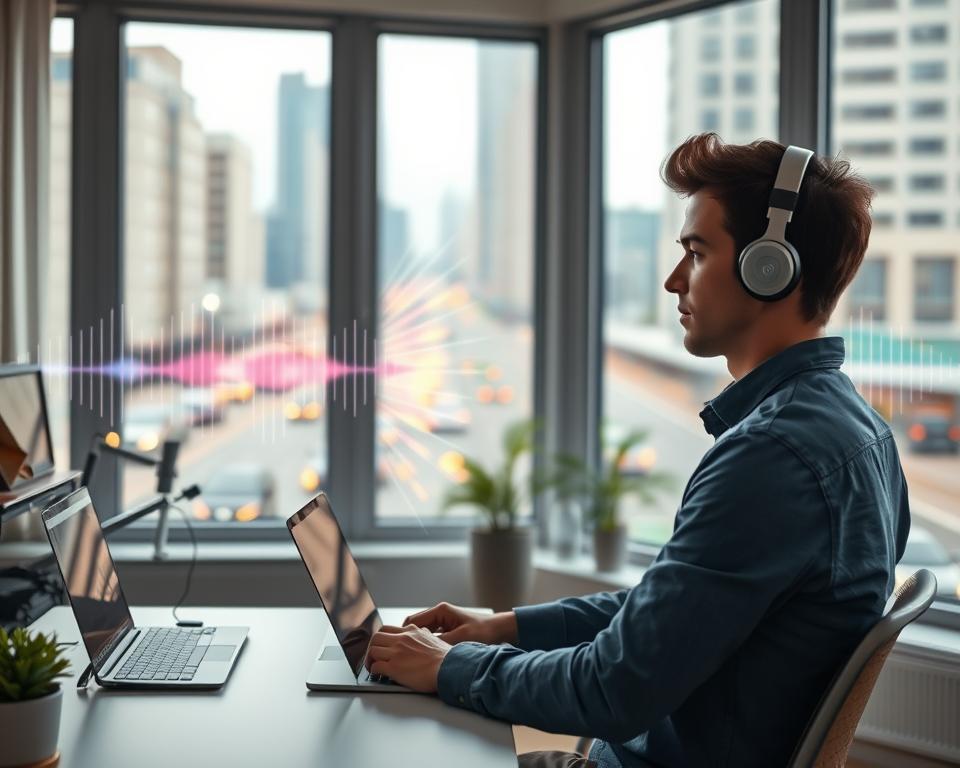
Put on ANC headphones or earbuds to cut steady air conditioner hums and fridge compressors. This lets you keep volume lower and protect your ear comfort.
Close doors, move slightly farther from loud appliances, and add soft furnishings to handle higher frequencies that electronics miss.
On the move: quieter commutes and travel
On planes and trains, active noise cancelling helps reduce engine and road rumble so your audio stays clear. Good-fit headphones pair well with cabin systems for better results.
At work and in shared spaces
Use devices with multi-microphone arrays to separate ambient noise from your voice on calls. Combine passive steps—like panels and seals—with noise cancelling on your ears for a balanced level.
Rooms and vehicles: wider control
In small cabins, systems that use multiple speakers and feedback microphones smooth low-frequency sound across the whole space.
- Adjustable modes let you keep awareness when walking or ramp up isolation when you need focus.
- If sounds shift, try moving a few feet to change how waves interact and find a quieter spot.
Choosing and setting up tech noise reduction for the best results
Choosing the right gear and fit is the fastest way to get quieter, clearer audio where it matters. Start by thinking about the sounds that bother you most. Low-frequency hums call for active noise cancellation, while higher-frequency chatter responds better to tight seals and dense materials.
Compare headphones and earbuds honestly. Over-ear headphones add passive isolation around your ears and often win for long sessions. Earbuds are lighter but depend on a strong seal and good active cancelling to perform.
Look for products with adjustable or transparency modes so you can stay aware when walking or speaking. Many anc headphones include personalization that adapts cancellation to your ear shape and travel habits.
- Fit matters: check eartips, cushions, and headband tension so seals stay consistent.
- Keep volume safe: aim for levels near normal conversation—this protects your ear health.
- Calls and microphones: choose headphones earbuds with multi-mic processing so your voice stays clear against background signals.
Test settings in the places you use most. Tiny shifts in placement or eartip size can change how sound waves couple to your ear and improve cancellation. For a deeper comparison, see noise-isolating vs noise-canceling.
Conclusion
In short, a few simple choices let you tame recurring hums and keep wanted audio clear.
Active noise and good passive seals work together: destructive interference from microphones and speakers cuts steady, low-frequency sounds, while dense materials handle higher pitches.
Pick headphones that fit, prefer designs with two microphones or more for calls, and use adaptive or transparency modes as needed.
For shared areas, multi‑speaker setups with feedback microphones help control low-frequency sound across a room.
Start small: pick one space, adjust fit and settings, and listen for the effect. For deeper reading on digital approaches to background sound control, see digital noise management.